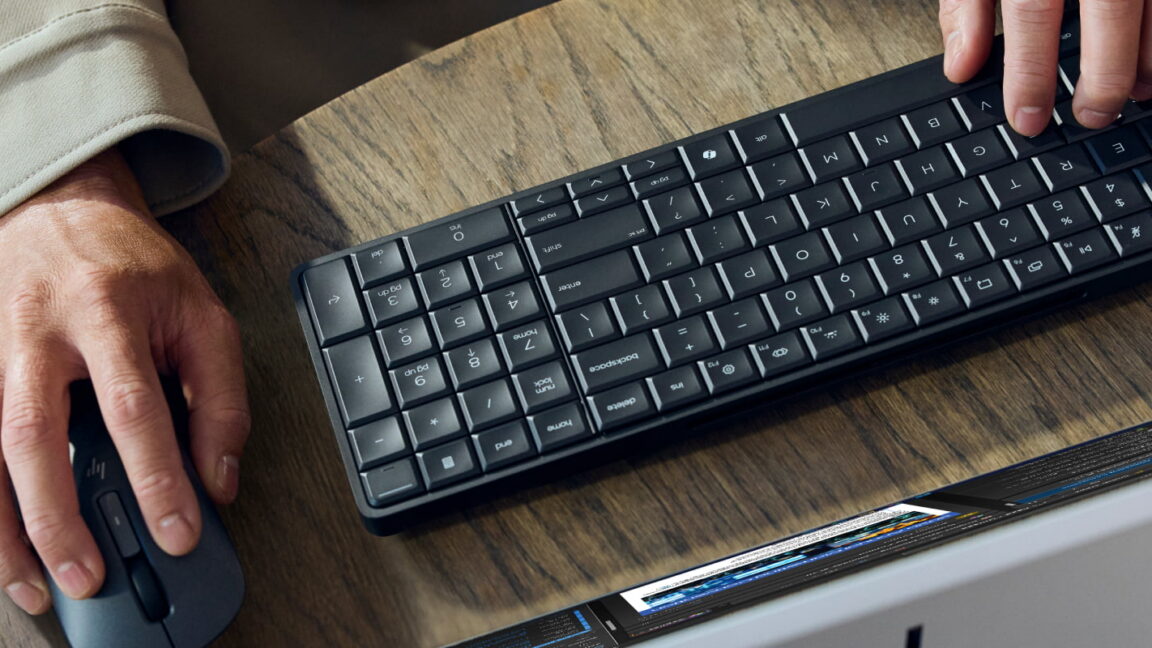
The most familiar, full-fledged PC experience you can get from a keyboard.
As a Windows system built inside of a functioning membrane keyboard, the HP EliteBoard G1a announced today is a more accessible alternative to other keyboard-PCs.
The Commodore 64 made the keyboard-PC famous in the 1980s, but the keyboard-PC space has been dominated by the Raspberry Pi. In 2019, the single-board computer (SBC) maker released the Raspberry Pi 400, which is essentially a Raspberry Pi 4 SBC inside a case that also functions as a keyboard for the system. USB, HDMI, and Ethernet ports, plus a GPIO header and native Raspberry Pi OS Linux distribution add up to a low-end desktop computer experience that only costs $100. It was followed by the Raspberry Pi 500, with a Pi 5 powered by a quad-core, 64-bit Arm Cortex-A76 inside; and the Pi 500+, which has an NVMe SSD, instead of microSD, storage and is built inside of a low-profile mechanical keyboard (it’s also twice as expensive at $200).
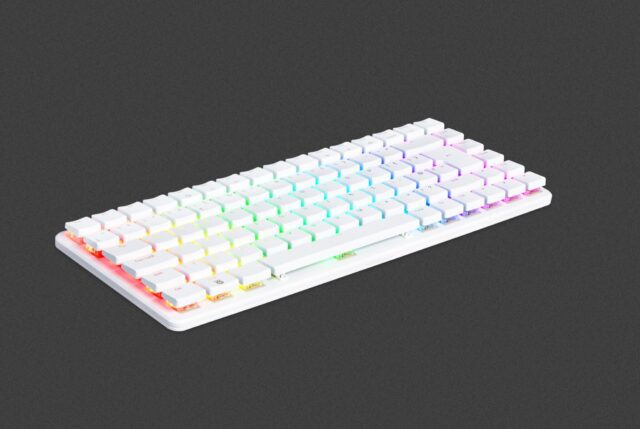
The Pi 500+ keyboard-PC using RGB.
Credit:
Raspberry Pi
But Raspberry Pis largely appeal to tinkerers, DIYers, and Linux fans, making Pi-as-a-desktop a niche product with a substantial learning curve for newcomers.